




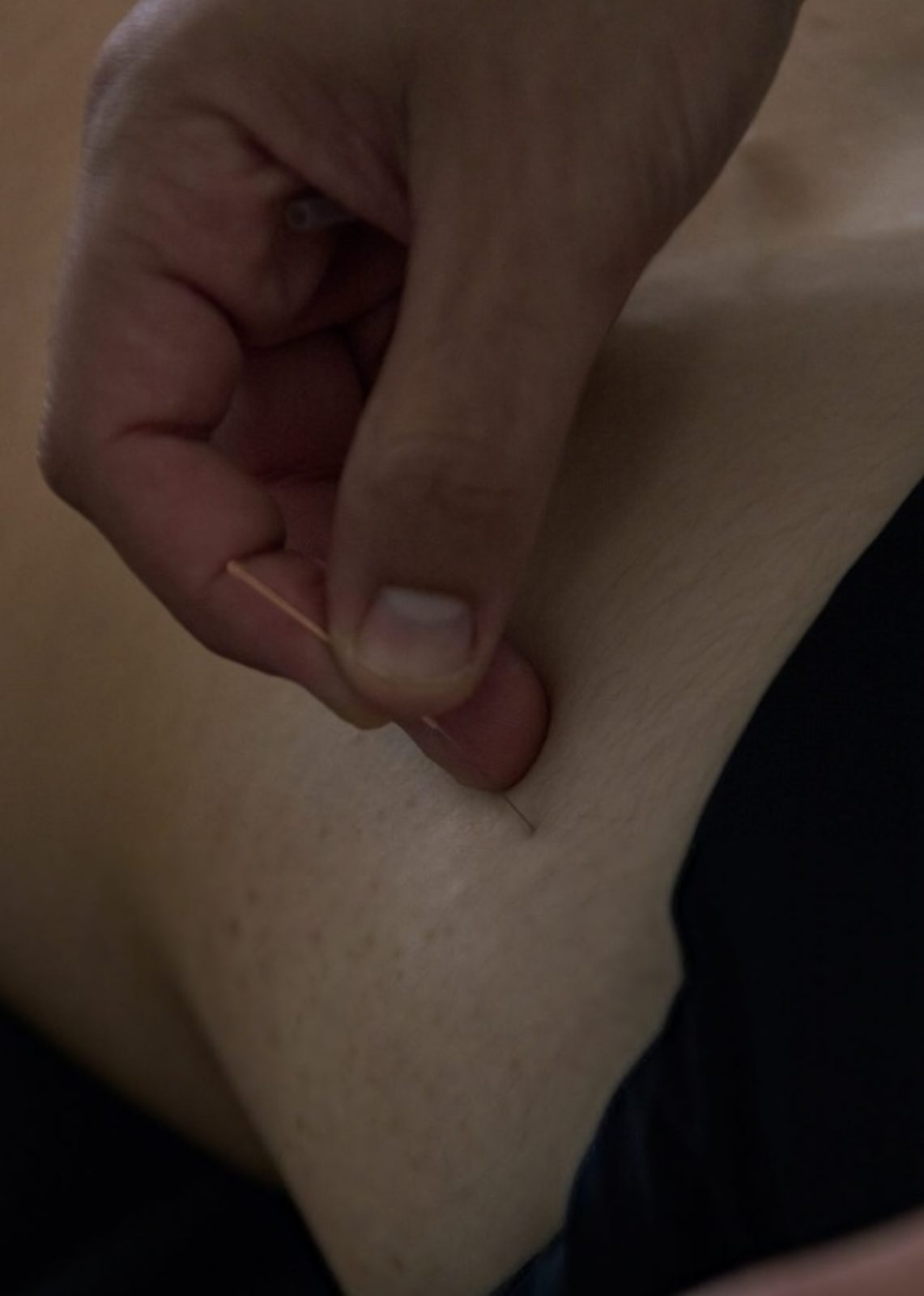
16 Nov Does Dry Needling Hurt? What to Expect Before and After
Maybe your chiro has suggested dry needling for that tight spot in your shoulder that’s been nagging you since footy preseason. Or you’re curious, but the word “needle” makes your stomach drop. Either way, the first question is almost always the same: does dry needling hurt?
Here’s the honest answer. Most people barely feel the needle go in, because it’s much finer than the kind used for blood tests or vaccines. What you may feel is a deep ache or a quick twitch in the muscle, which can be uncomfortable for a second or two. Afterwards it’s common to feel sore for a day or so, a bit like after a hard session at the gym. It’s normal to feel nervous about it, and it’s always your call whether you have it.
What is dry needling?
Dry needling uses very fine, solid needles placed into tight or tender areas of muscle, often called trigger points. It’s “dry” because nothing is injected. There’s no medication, just the needle.
The idea is that needling a sensitive spot may help the muscle relax and calm the pain signals coming from that area, at least for a while. Researchers are still working out exactly how.
In Australia, dry needling is used by trained chiropractors, physios and other health professionals. At Beyond Health, our chiropractors Peter Hannah and Lachlan Fox have both completed dry needling training.
Does dry needling hurt? What it actually feels like
Everyone’s a bit different, but most people describe it in three stages.
The needle going in. Often you won’t feel it at all, or you’ll notice a tiny prick.
Reaching the tight spot. When the needle reaches a sensitive area of muscle, you may feel a deep, dull ache or a cramping sensation. Sometimes it feels like the exact spot that’s been bugging you.
The twitch response. Sometimes the muscle gives a quick, involuntary jump. It feels a bit like a cramp that lets go straight away, and usually lasts less than a second. Not everyone gets a twitch, and that’s fine too.
The more sensitive the area, the more you’re likely to notice it. You’re in charge the whole way through. If something feels too much, say so and your clinician will stop or adjust.
Soreness after dry needling: how long does it last?
Feeling sore afterwards is the most common side effect. It feels like a bruised or worked-out muscle. For most people it settles within 24 to 48 hours, though some notice it for up to three days. If you’ve just read our post on feeling sore after a chiro adjustment, it’s a similar kind of short-lived ache.
A few things tend to help:
- Keep moving gently, like an easy walk along the Swan River or around the block
- Try heat on the area if it feels tight, or a cold pack if there’s a small bruise
- Do any simple stretches or exercises your clinician gives you
Small bruises, a little bleeding at the needle site, or feeling tired or a bit light-headed for a short time can also happen. If soreness is getting worse rather than better after a couple of days, give us a call so we can check in.
Dry needling vs acupuncture
They look similar, and both use fine, single-use needles, but the thinking behind them is different.
Traditional acupuncture comes from Chinese medicine and places needles at set points along meridians, believed to be channels of energy.
Dry needling is based on Western anatomy. The clinician assesses your muscles and movement, finds the tight or sensitive areas linked to your pain, and needles those. It’s one tool within musculoskeletal care rather than a whole system of medicine.
Is dry needling safe, and who might it not suit?
For most people, dry needling done by a trained clinician is low risk. We use sterile, single-use needles that go straight into a sharps bin afterwards. Serious problems are rare, but you should know about them.
When needling around the upper back, shoulders or chest, there’s a small risk of the needle reaching the lining of the lung, which can cause a partially collapsed lung (pneumothorax). It’s uncommon, and trained clinicians use careful technique in these areas to keep that risk low. If you ever had sudden chest pain or shortness of breath after needling, you’d need urgent medical care.
Dry needling may not be right for you, or may need extra care, if you:
- Have a strong fear of needles (there are plenty of other options)
- Are pregnant or might be, especially in the first trimester
- Have a bleeding disorder or take blood thinners
- Have a skin infection, wound or swelling over the area
- Are feeling unwell, have a fever, or have a weakened immune system
Tell your clinician about your health history and medications. If needling isn’t a good fit, they’ll use something else.
What a session looks like
Dry needling is never the first thing we do. We’ll start by talking through what’s going on and checking how you move. If needling might help, we’ll explain what’s involved, what you may feel and the possible side effects, and then ask for your consent. You can say no, or change your mind at any point, and it won’t change the care you get.
If you go ahead, the area is cleaned, a few needles are placed, and they’re either moved gently for a moment or left in for a few minutes while you relax. Then they’re removed and binned.
Dry needling is usually one part of a plan, not the whole plan. It’s often combined with hands-on treatment, movement and exercises you can do at home, so you’re building strength and confidence rather than relying on any one treatment. Our guide to your first chiro or physio visit walks you through a first appointment.
What does the research say?
The evidence is mixed. Some studies suggest dry needling may ease muscle pain in the short term for some people, while others find small effects, and many trials are small. So we see it as an option that may help you move more comfortably while you work on the bigger picture, not a stand-alone fix.
Thinking about dry needling in Perth?
If you’d like to talk it through, our chiropractors at Applecross and our sports chiros in Osborne Park can assess what’s going on and talk through whether dry needling may suit you.
Not sure where to start? Come in for a free screening and we’ll tell you straight. It’s a short chat and a few simple movement checks to see whether chiro or physio may suit you. It isn’t treatment, and there’s no obligation. You can book online, or call Applecross on (08) 6311 7646 or Osborne Park on 0435 668 595.
Dry needling: FAQs
Does dry needling hurt?
Most people barely feel the needle go in. You may feel a deep ache, a cramping sensation or a quick muscle twitch when it reaches a tight spot, which is usually brief. You can ask your clinician to stop at any time.
How long are you sore after dry needling?
Soreness usually settles within 24 to 48 hours, though some people notice it for up to three days. If it’s getting worse after a couple of days, contact your clinician.
What is the difference between dry needling and acupuncture?
Both use fine, single-use needles. Acupuncture is based on traditional Chinese medicine and meridian points, while dry needling is based on Western anatomy and targets tight or sensitive areas of muscle linked to your pain.
Is dry needling safe?
For most people it’s low risk when done by a trained clinician using sterile, single-use needles. Serious problems such as a collapsed lung are rare. Tell your clinician if you’re pregnant, take blood thinners or have a bleeding disorder.
Do I have to have dry needling if my clinician suggests it?
No. Your clinician will explain it and ask for your consent first, and you can say no or stop at any time.
This article is general information only and isn’t a substitute for personalised advice. Everyone’s different, so please see a registered health professional about your own situation. If you have sudden chest pain or shortness of breath after needling, or any severe or worsening symptoms, seek urgent medical care.


No Comments