




19 Nov Does Kinesiology Tape Work? KT Tape vs Rigid Sports Tape
Maybe you’ve watched a netballer run out at the State Netball Centre with bright blue strips across her knee, or a mate at the gym turned up with tape running down his shoulder and swore it was the only thing getting him through the session. Now your own knee, ankle or shoulder is playing up and you’re wondering whether a roll of tape is worth a shot.
Here’s the honest answer. Tape can be a useful helper, but it isn’t a fix on its own. Stretchy kinesiology tape may take the edge off pain for a short time for some people. Rigid sports tape does a different job: it supports a joint and limits how far it can move, which is why it’s been used on ankles for decades. Neither one heals an injury. What usually makes the difference is the right diagnosis and a plan to load the area back up.
Two very different tapes
People tend to lump all tape together, but the two main types work in almost opposite ways.
Kinesiology tape (KT tape)
This is the stretchy, often brightly coloured tape you see on athletes. It’s thin, flexible and designed to move with your skin, so you keep full range of motion. It’s often applied in strips or patterns over a muscle, tendon or joint and can stay on for a few days, through showers and training.
The theory is that it gently lifts the skin, changes the signals going from that area to your brain and gives you a little more awareness of how you’re moving. Some people say it simply feels supportive and less sore.
Rigid sports tape
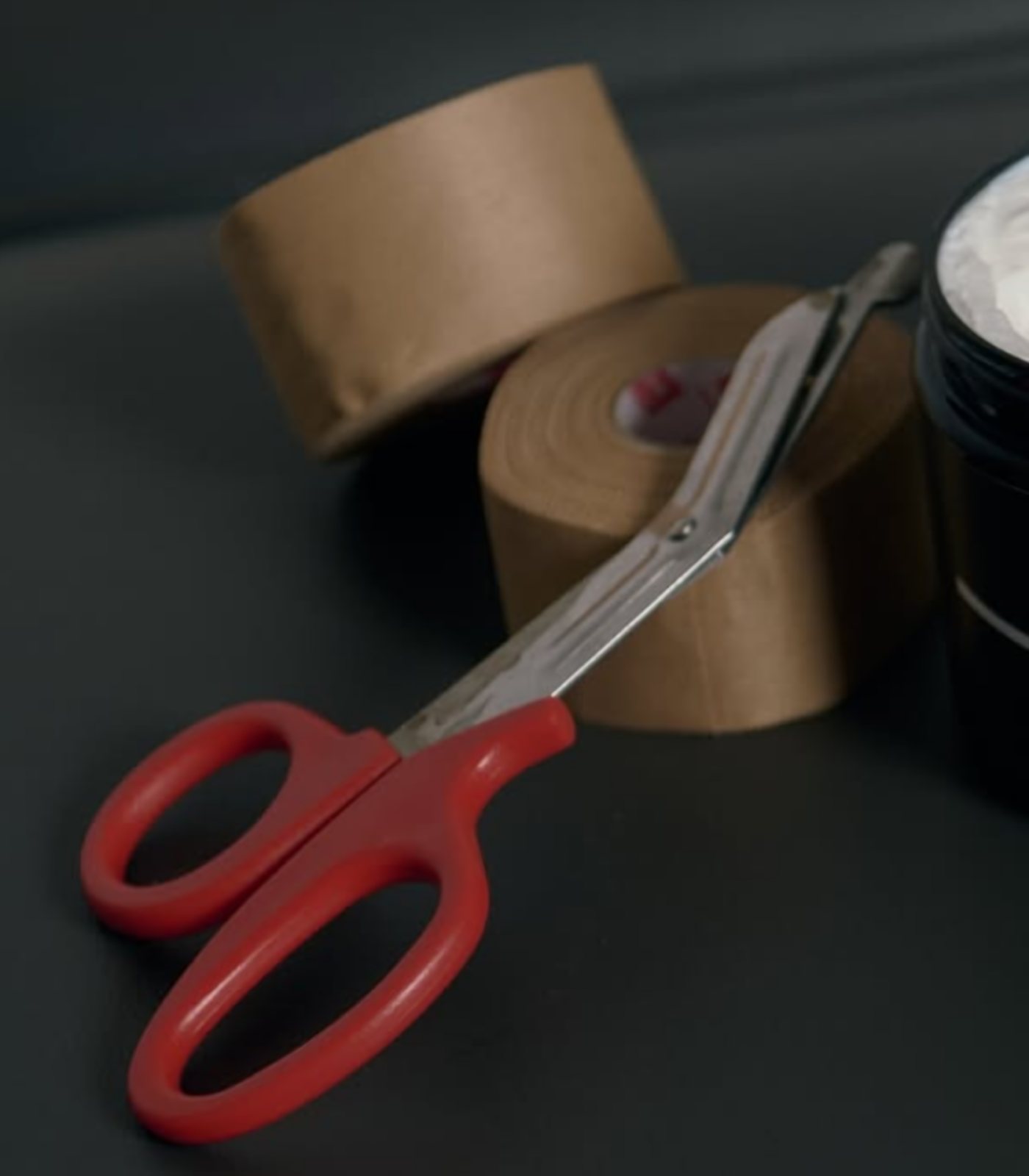
This is the tan or white non-stretch tape, the kind in the photo above from our treatment room. Its job is to restrict movement. Wrapped around an ankle, it limits the rolling-in movement that causes most sprains. Around a thumb or finger, it protects a sprained joint while you keep playing. It’s usually put on just before training or a game and taken off straight after, often over an underwrap to protect your skin.
Does kinesiology tape work? What the research says
Kinesiology tape has been studied a lot, and the results are pretty modest. Large reviews pulling together hundreds of trials suggest it may reduce pain a little in the short term, sometimes for a few days, and some people move more comfortably while it’s on. Over the medium term, though, it doesn’t seem to do much more than other treatments, and in many studies it performed about the same as sham taping (tape applied without the “proper” stretch or pattern).
So does that mean it’s useless? Not quite. If tape helps you get through your rehab exercises or a shift on your feet with less pain, that has value. The catch is that it shouldn’t replace the things that actually build capacity: graded exercise, strength work and sensible changes to your training load.
Where rigid tape earns its place
The strongest case for taping is the ankle. Rolled ankles have a habit of coming back, and taping or bracing an ankle for sport in the months after a sprain is a common, well-supported way to lower the chance of another one, especially in sports with lots of jumping and change of direction like netball, basketball and footy. It tends to work well alongside balance and strength work, not instead of it. Our post on sprained ankle recovery covers that rehab in more detail.
Rigid tape is also handy for protecting sprained fingers and thumbs, and sometimes for offloading painful areas for a short time, such as the arch of the foot.
When tape may help
Taping makes the most sense when it’s one part of a bigger plan. That might be:
- Getting back to sport after an ankle sprain while your balance and strength catch up
- Taking the edge off a sore knee or shoulder so you can do your exercises more comfortably
- Protecting a sprained finger or thumb during training or a game
- Giving you a reminder to move or sit a certain way while you change a habit
Taping is something our team may use alongside hands-on treatment and exercise, but plenty of people never need it at all. If you’d like to know whether it suits your injury, the clinician assessing you can talk it through.
When tape isn’t the answer
Tape can hide a problem that needs proper attention. Skip the DIY taping and get checked if you have:
- A joint that gave way with a pop, swelled quickly or can’t take your weight
- Pain that’s getting worse rather than better after a week or two
- Numbness, pins and needles or weakness
- An ankle that keeps rolling, or a knee that feels unstable
- Significant bruising, deformity or pain after a fall or heavy knock
If you’ve had a big injury, can’t weight bear or have any concern about a fracture, see your GP or an emergency department first.
Tips if you’re taping yourself
Start on clean, dry skin with no lotion. Round the corners of kinesiology tape so it doesn’t peel, and don’t put the stretch on the ends, which is where skin irritation tends to start. Never wrap rigid tape tight in a full circle around a calf, thigh or arm, because it can restrict circulation as the area swells. Take tape off straight away if your skin itches, burns, blisters or your toes or fingers go cold, pale or tingly. If you have sensitive skin, try a small patch first.
Most importantly, keep doing your rehab. Tape is the support act, not the main event. If you’re unsure how hard to push while you’re sore, our guide on whether to train through pain may help.
Getting your injury checked
If you’re reaching for tape because something hasn’t settled, it’s usually worth finding out what’s going on first. At Osborne Park, our sports chiropractors and our physio, Pádraig Hughes (physiotherapy at Osborne Park), see plenty of sport and gym injuries. Our Applecross chiropractors can assess you south of the river. You’ll find more on common problems in our guides to sports injuries, knee pain and shoulder pain, and remedial massage at Osborne Park can be part of the mix too (remedial massage Osborne Park).
If you’re not sure where to start, come in for a free screening and we’ll tell you straight. It’s a short chat and a few simple movement checks to see whether chiro or physio may suit you. It isn’t treatment and there’s no obligation. You can book online or call Applecross on (08) 6311 7646 or Osborne Park on 0435 668 595.
FAQs
Does kinesiology tape actually work?
Research suggests kinesiology tape may give a small, short-term drop in pain for some people, but it hasn’t been shown to fix injuries or work much better than other treatments or sham taping over the longer term. Think of it as a possible helper alongside exercise and rehab, not the treatment itself.
What’s the difference between KT tape and sports tape?
Kinesiology (KT) tape is stretchy and moves with you, so it’s used for light support and comfort while you keep moving. Rigid sports tape doesn’t stretch, so it’s used to limit movement and support a joint, most often an ankle, thumb or finger, during sport.
How long can you leave kinesiology tape on?
Many people wear it for a few days, and it usually survives showers. Take it off sooner if your skin itches, burns, blisters or goes red. Rigid tape is normally removed straight after training or a game.
Should I tape my ankle for sport after a sprain?
Taping or bracing is commonly used to support an ankle in the months after a sprain while you rebuild strength and balance. It tends to work well alongside a rehab program, and it’s worth getting the ankle assessed if it keeps rolling or still feels unstable.
Can I tape myself?
You can learn simple tape jobs yourself, and lots of athletes do. It’s still worth having a clinician check the injury first and show you the technique, because tape put on too tight or in the wrong spot can irritate skin or restrict circulation.
This article is general information only and isn’t a substitute for personalised advice. Everyone’s different, so please see a registered health professional about your own situation, and seek urgent medical care if you have severe or worrying symptoms.


No Comments