




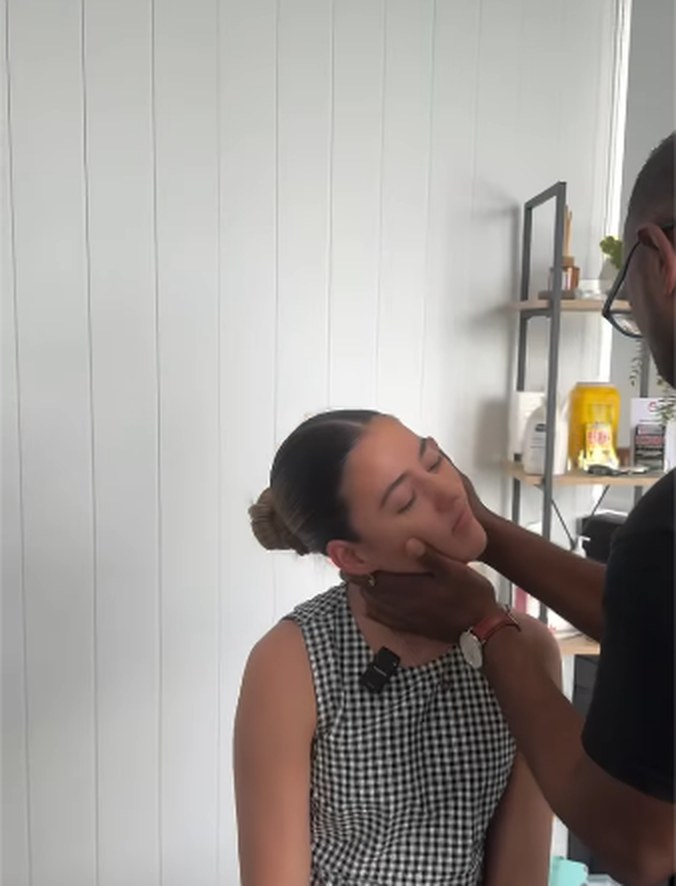
14 Nov Why Does My Neck Crack? Is It Bad to Crack Your Own Neck?
Maybe you’re at your desk, you tilt your head to the side and get that satisfying pop. Or your neck crunches every time you look over your shoulder on the Kwinana Freeway. Either way, you’ve started wondering whether all that cracking is doing damage.
Here’s the honest answer: for most people, a neck that pops or clicks now and then isn’t a sign of anything serious, especially when there’s no pain with it. Cracking your own neck once in a while is very unlikely to hurt you. But if you feel the urge to do it constantly, or the cracking comes with pain, stiffness or other symptoms, that’s worth paying attention to. Here’s how to tell the difference.
What’s actually making the cracking sound?
The joints in your neck, called facet joints, sit in a small capsule filled with fluid. When you stretch or twist the joint quickly, the pressure inside the capsule drops and a small gas bubble forms in that fluid. That’s the pop. Imaging studies of knuckle cracking have shown this gas cavity forming in real time, and the same thing is thought to happen in the spine.
It’s also why you usually can’t crack the same spot again straight away. The joint needs some time, often 20 minutes or more, before the gas goes back into solution and it’ll pop again.
Not every noise is a gas release, though. Some clicks come from tendons or ligaments sliding over bone as you move. A soft grinding or crunching feeling when you turn your head, sometimes called crepitus, is also common, and it becomes more common as we get older. On its own, without pain, it usually isn’t a worry.
Is it bad to crack your own neck?
An occasional self-crack is generally harmless. The bigger question is why you feel the need to do it.
People who crack their neck many times a day often describe a tight, stuck feeling that eases for a few minutes after the pop, then comes straight back. That short relief is real, but it doesn’t change whatever is making the neck feel tight in the first place. Often it’s long hours in one position, stress, poor sleep or muscles that are working harder than they need to.
There’s another wrinkle. When you crack your own neck, you can’t choose which joint moves. The joints that move most easily tend to be the ones that pop, and they’re often not the stiff ones that are bothering you. Over time, some people find they’re chasing the same tight feeling all day without ever getting on top of it.
Very rarely, forceful or repeated twisting of the neck has been linked to injury of the arteries in the neck. This is uncommon, and we mention it so you know the signs rather than to worry you. They’re listed in the red flags section below.
Neck cracking with pain, stiffness or headaches
A painless pop is one thing. Cracking that comes with pain is a different story. If your neck clicks and also aches, feels stiff first thing in the morning, or gives you headaches that start at the base of your skull, the noise is usually just a passenger. The real issue is how the neck is moving and how it’s being loaded through your day.
Desk work is a common culprit. If you spend most of the day looking down at a laptop, then the evening looking down at your phone, the muscles at the back of your neck stay switched on for hours. Our post on neck pain and headaches from desk work goes through the changes that often help most.
What you can try this week
If your neck feels tight and you keep reaching for that crack, try these instead for a week and see how it feels:
Move it gently, often. Slow head turns, chin tucks and shoulder rolls every 30 to 45 minutes give the neck the movement it’s craving without the quick, forceful twist. Think of it as little and often rather than one big pop.
Change your position more than your posture. There isn’t one perfect posture. The bigger problem is staying in any position for too long. Get up, walk to the kitchen, take calls standing. If you’re on a long drive or a FIFO flight, roll your shoulders and turn your head gently when it’s safe to.
Use heat. A warm shower or heat pack on the back of the neck often helps tight muscles relax.
Check your sleep set-up. If you wake up stiff most mornings, your pillow height may be worth a look. Your head should sit roughly level with your spine, not propped up or dropped down.
Notice the habit. A lot of neck cracking happens on autopilot, especially when people are stressed or concentrating. Just noticing when you do it is often the first step to doing it less.
When to get your neck checked
It’s worth seeing a chiropractor, physio or your GP if the cracking comes with any of these:
- Neck pain or stiffness that hasn’t eased after a couple of weeks
- Headaches that keep coming back, especially ones that start in the neck
- A feeling that your neck regularly gets “stuck” or locked
- Pain, pins and needles or numbness spreading into your shoulder or arm
- Cracking that started after a fall, car accident or sports knock
Call 000 straight away if, after cracking or twisting your neck, you have a sudden severe headache or neck pain unlike anything you’ve had before, especially with dizziness, double vision, trouble speaking or swallowing, facial drooping, or weakness or numbness on one side of your body. These need emergency care, not a wait-and-see approach.
What happens if you come in
At a first visit, your chiropractor will ask about your neck, your work, your sleep and what you’ve already tried, then look at how your neck and upper back move. They’ll also screen for anything that needs a GP or imaging instead. From there, they’ll explain what they think is going on and what your options are, which might include hands-on treatment, mobilisation (slow, gentle movement of a joint), soft tissue work and simple exercises you can do at home. If you’d rather not be adjusted, just say so. There are gentler options, and it’s your call.
It’s also normal to feel a bit sore for a day or so after treatment. Our guide to soreness after a chiro adjustment explains what’s expected and what isn’t.
We have chiropractors at our Applecross clinic on Canning Hwy and at our Osborne Park clinic, where you can also see a physio or book remedial massage for tight neck and shoulder muscles.
If you’re not sure whether your neck needs looking at, come in for a free screening. It’s a short chat and a few simple movement checks to see whether chiro or physio may suit you. It isn’t treatment and there’s no obligation. You can book online, or call Applecross on (08) 6311 7646 or Osborne Park on 0435 668 595.
FAQs
Is it bad to crack your neck every day?
An occasional crack is very unlikely to cause harm. If you feel you need to crack your neck many times a day, that usually points to ongoing tightness or stiffness that’s worth looking into, rather than something the cracking will fix.
Why does my neck crack when I turn my head?
Most often it’s a small gas bubble forming in the fluid of a joint, or a tendon sliding over bone. Painless cracking or crunching is common and usually nothing to worry about.
Can cracking your neck cause arthritis?
There’s no good evidence that cracking joints causes arthritis. Research on knuckle cracking hasn’t found a link, although neck joints haven’t been studied in the same way.
Why does cracking my neck feel so good?
The quick stretch and release can ease muscle tension for a short while, and many people find the pop itself satisfying. The relief tends to wear off quickly if the underlying tightness hasn’t changed.
Should I see a chiropractor or a physio for neck cracking?
Both chiropractors and physios assess and treat neck problems. If the cracking is painless, you may not need either. If it comes with pain, stiffness or headaches, either can help you work out what’s going on. Our guide to choosing between physio and chiro may help.
This article is general information only and isn’t a substitute for personal medical advice. Everyone’s different, so please see a registered health professional about your own situation.
Related guide: Neck pain treatment in Perth – how our chiropractors and physio assess neck pain and headaches, and where to book in Applecross or Osborne Park.


No Comments