




18 Nov Rib Pain When Breathing? Common Causes and When to Worry
Say you’ve been coughing for a week with a cold, or you twisted to grab something off the back seat on the Canning Hwy commute, and now one spot around your ribs catches every time you take a deep breath. Maybe it’s in your upper back near the spine, maybe it’s on the side of your chest. Either way, it’s hard not to worry when breathing itself hurts.
Here’s the honest answer. A lot of rib pain that’s worse when you breathe in, cough, sneeze or twist comes from the muscles and joints of the rib cage, and it often settles over a few days to a few weeks. But chest and rib pain can also come from the heart, lungs or other organs, so the first job is ruling those out. If you have any of the warning signs below, skip the rest of this article and get medical help now.
First: when rib pain needs urgent care
Call 000 or go to an emergency department if rib or chest pain comes with any of these:
- Shortness of breath, struggling to breathe, or breathing that’s getting harder
- Chest pain or pressure that spreads to your arm, jaw, neck or back, especially with sweating, nausea or feeling faint
- Coughing up blood
- Pain that came on suddenly and severely with no clear movement or strain behind it
- A hard fall, car accident or heavy blow to the chest
- One calf swollen, hot or painful, or you’ve recently had surgery, a long flight or been laid up
See your GP soon if you have a fever, a cough that won’t shift, a painful rash or blisters on one side of your trunk (this can be shingles), unexplained weight loss, night pain that doesn’t ease with any position, or a history of cancer or osteoporosis. These don’t always mean something serious, but they need a medical look first.
Common musculoskeletal causes of rib pain when breathing
When the warning signs are clear, these are the usual suspects. They often overlap, and it isn’t always possible to tell them apart without an assessment.
Rib joint irritation at the back
Each rib joins your spine at small joints called the costovertebral and costotransverse joints. A sudden twist, a heavy lift, a big sneeze or long hours hunched at a desk can irritate one of them. People often describe a sharp, catching pain on one side, right next to the spine, that bites on a deep breath, cough or turn. It can also wrap around towards the side or front of the chest, or sit near the shoulder blade. Some people call this a “rib out of place”. The rib hasn’t actually popped out. The joint and the tissue around it are irritated and the muscles nearby tend to guard.
Intercostal muscle strain
The intercostals are small muscles between your ribs that help you breathe and twist. They can be strained by a coughing fit, a sudden reach, rowing, golf, tennis, overhead work or a new move at the gym. The pain tends to be tender between two ribs, sore with breathing, coughing and trunk rotation, and achy afterwards.
Costochondritis (front of the chest)
This is irritation where the ribs join the breastbone through cartilage. It usually causes tenderness at the front of the chest that you can find by pressing, and it can hurt with deep breaths or certain arm movements. Because it’s at the front of the chest, it’s important to have chest pain checked by a GP first rather than assume it’s costochondritis.
Referred pain from the mid back
Stiffness or irritation in the thoracic spine (the mid back) can refer pain around the rib cage. If you also have a nagging ache between your shoulder blades, our guide to pain between the shoulder blades covers that side of things.
A cracked or bruised rib
After a fall, a knock in footy or a car accident, or even after a long bout of heavy coughing in someone with weaker bones, a rib can bruise or crack. Pain is usually very localised, sharp with breathing, and worse when you press on that exact spot. This needs a GP or emergency assessment, not a hands-on treatment first.
What you can do this week
For a mild, mechanical rib niggle with no red flags, these simple steps often help it settle.
Keep breathing normally. It’s tempting to take shallow breaths to avoid the catch, but that can leave your chest and upper back stiffer. A few slow, comfortable deep breaths every hour, without forcing into sharp pain, helps keep things moving. If you have a cough, hugging a pillow against your chest when you cough can take the edge off.
Stay gently active. Walking is usually fine and often helps. Ease off whatever clearly sets it off, like heavy lifting, big twists or pulling movements, for a few days.
Try heat and easy movement. A warm shower or heat pack on the upper back often eases muscle guarding. Gentle shoulder rolls and slow, small seated rotations in a pain-free range can help too.
Think about how you sleep. Many people find lying on the non-sore side, or on their back with a pillow under the arms, is more comfortable for a few nights.
Ask about pain relief. Your GP or pharmacist can tell you what’s suitable for you.
If it’s clearly improving week by week, that’s a good sign. If it’s not settling after a week or two, keeps flaring, or you’re just not sure what it is, it’s worth getting it checked.
When it’s worth getting checked, and what happens if you come in
At Beyond Health, our chiropractors at Applecross and Osborne Park start with a proper history and screening questions to make sure the pain isn’t coming from somewhere that needs a GP instead. If something doesn’t add up, we’ll tell you straight and refer you on.
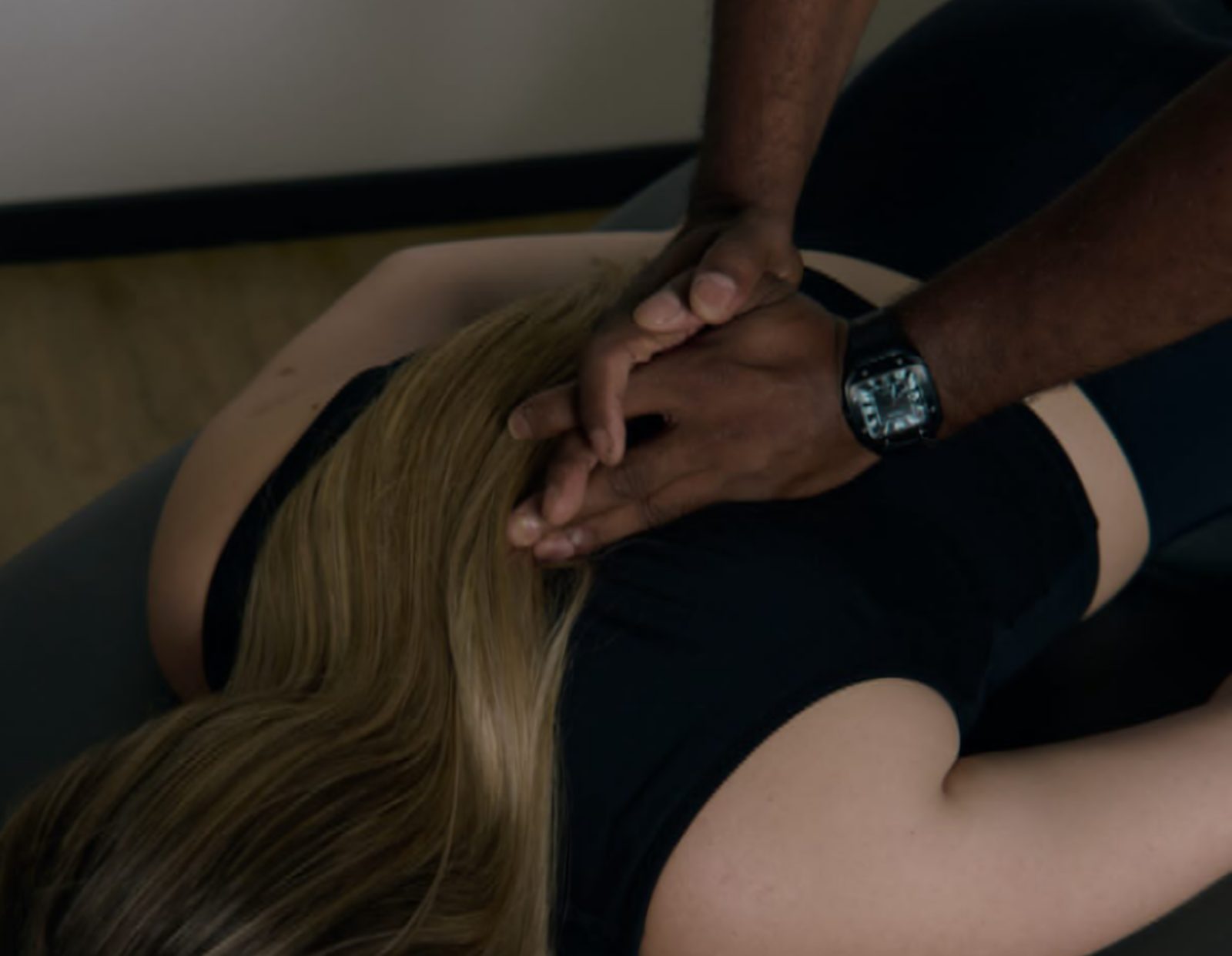
If it looks musculoskeletal, we’ll check how your mid back, ribs and shoulders move, which breaths and movements reproduce the pain, and where it’s tender. Depending on what we find and what you’re comfortable with, care may include gentle joint mobilisation or adjustment, soft tissue work, and simple breathing and mobility exercises to do at home. For people who’d like hands-on muscle work as part of their plan, remedial massage at Osborne Park can be an option, and if your rib pain is tied to training or rehab, Pádraig Hughes, our physiotherapist at Osborne Park, can help with a progressive exercise plan. You can read more about how we approach the mid and lower back on our back pain page.
Not sure whether it’s worth booking? Come in for a free screening: a short chat and a few simple movement checks to see whether chiro or physio may suit you. It isn’t treatment and there’s no obligation. You can book online or call Applecross on (08) 6311 7646 or Osborne Park on 0435 668 595.
Frequently asked questions
Why does my rib hurt when I take a deep breath?
Breathing moves every rib and the small joints and muscles around them, so an irritated rib joint, strained intercostal muscle or irritated cartilage at the front of the chest can catch on a deep breath. Because heart and lung problems can also cause pain with breathing, get urgent help if you’re short of breath, have chest pressure or feel unwell.
How long does rib pain from a strain take to settle?
It varies. Many mild rib joint and muscle strains settle over a few days to a few weeks, while a bruised or cracked rib often takes longer. If it isn’t steadily improving after a week or two, have it assessed.
Can a rib actually go out of place?
A rib doesn’t usually pop out of its joint. What people describe as a rib out of place is usually an irritated rib joint at the spine with the surrounding muscles guarding, which can make breathing and twisting feel sharp and stuck.
Should I see a GP or a chiropractor for rib pain?
If you have shortness of breath, chest pressure, fever, a cough that won’t settle, a rash, or pain after a fall or accident, see a GP or emergency department first. If it started with a twist, cough or strain and you otherwise feel well, a chiropractor or physio can assess it and refer you on if anything doesn’t fit.
Is it safe to exercise with rib pain?
Gentle walking and easy movement are usually fine and often help. Back off movements that cause sharp pain, such as heavy lifting, big twists and pulling, until it settles, and stop and seek help if you become breathless or feel unwell.
This article is general information only and isn’t a substitute for personalised advice. Everyone’s different, so please see a registered health professional about your own situation, and seek urgent medical care if you have severe or worrying symptoms.
Related guide: Upper back pain treatment in Perth


No Comments